Table of contents
Step-free stations, low-floor buses, and protected bike lanes have become the global shorthand for “inclusive mobility”, yet the lived reality in many cities remains a daily obstacle course, and not only for wheelchair users. As urban populations age and disability prevalence rises, transport systems are being tested on reliability, affordability, and dignity as much as on speed. With the World Health Organization estimating that about 1.3 billion people, roughly 16% of the world’s population, live with a disability, the question is no longer whether cities should adapt, but whether they can do it fast enough.
Accessibility isn’t a niche, it’s the baseline
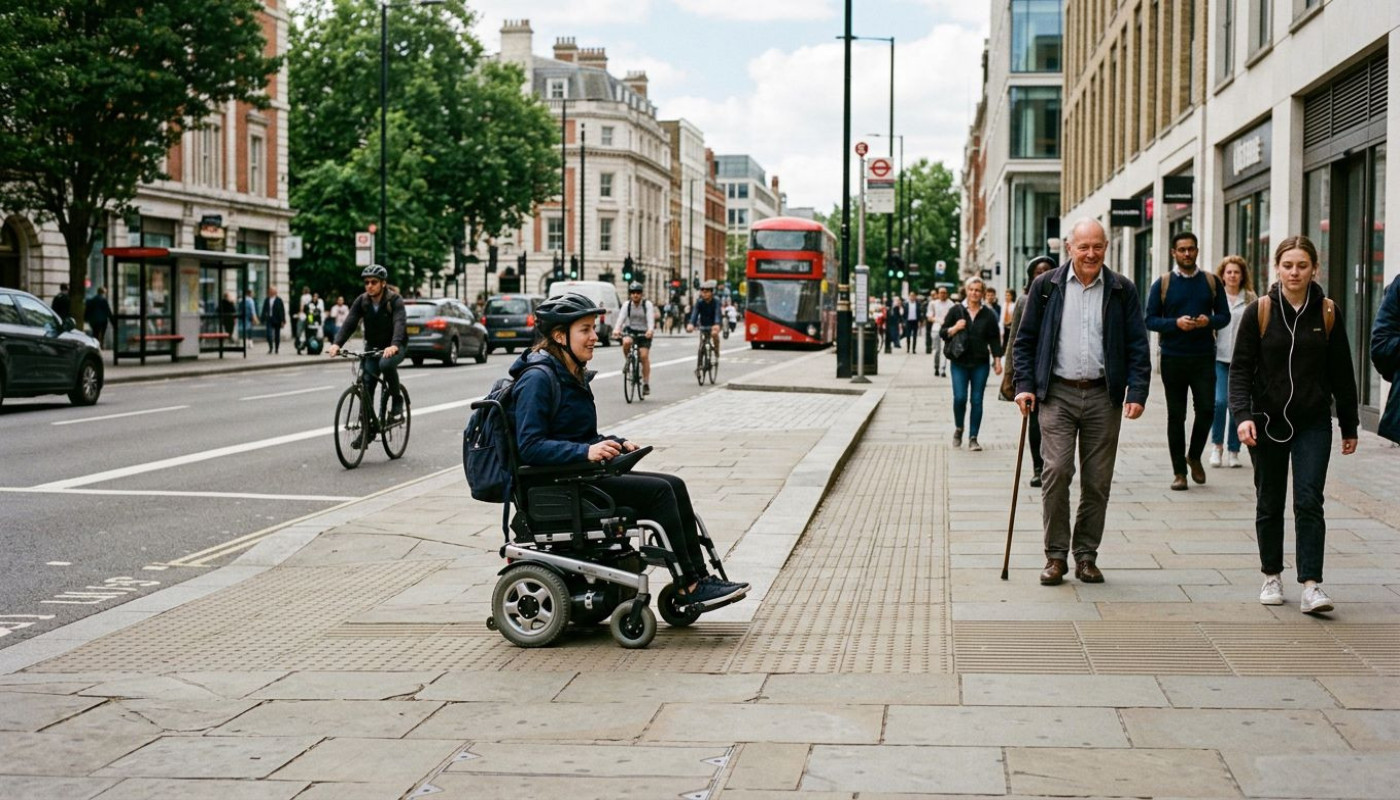
What does “accessible” really mean in 2026? In too many places, it still means a ramp at the front door and a compliance checkbox, even though mobility barriers are often systemic, and they compound each other across the whole journey. A station might advertise elevator access, yet a single broken lift turns an “accessible route” into a dead end, and when that happens repeatedly, people stop trusting the network. The issue is not marginal: the WHO’s estimate of 1.3 billion people living with a disability implies a population larger than Europe, and when you add older adults, parents with strollers, travelers with luggage, or someone recovering from injury, the group that benefits from step-free design becomes the majority on many corridors.
The economics point the same way. The International Transport Forum has repeatedly highlighted that universal design tends to raise overall service quality because it reduces friction for everyone, and it can improve throughput at busy interchanges because boarding is faster when there are fewer steps and fewer conflicts. Yet the daily experience still hinges on small, practical details: audible and visual announcements that match reality, tactile paving that is continuous rather than decorative, curb cuts that actually line up with crossings, and drivers trained to wait the extra seconds that make a bus usable. These are not glamorous investments, but they are the difference between theoretical access and real autonomy, and they are often cheaper than the major capital projects cities prefer to showcase.
Affordability decides who gets to move
Inclusion collapses when the fare is a barrier. Cities can build shiny new tramlines, but if the monthly pass eats a disproportionate share of income, mobility becomes conditional, and the people most likely to need reliable public transport, including low-income workers, students, and many disabled residents, are the first pushed out. The data are blunt: across OECD countries, transport represents a significant slice of household budgets, and for poorer households it is routinely a higher share of spending than for wealthier ones, a pattern echoed by national statistical offices and by OECD distributional analyses. When fares rise faster than wages, the system quietly re-segregates, and the “choice” to drive becomes a forced option for those who can afford it.
Affordability is not just a price tag, it is a design choice. Distance-based pricing can punish people who live farther out because housing is cheaper there, and complicated discount schemes can exclude those who do not have the right documentation or digital access. Some cities have responded with targeted fare caps, off-peak discounts, and free transfers, while others have experimented with fare-free networks, often on smaller systems where enforcement costs are high and ridership gains are politically valuable. The evidence is mixed on congestion impacts, but it is consistent on one point: lowering fare barriers tends to boost ridership among groups that were previously underrepresented, provided service levels are adequate. Without frequency and safety, a cheaper ticket does not buy freedom, it buys frustration.
Safety, not speed, shapes women’s routes
Ask a frequent rider what determines their trip, and you may hear a word transport planners once treated as secondary: fear. Women, LGBTQ+ riders, and many disabled passengers routinely adjust routes, travel times, and even job choices around perceived risk, and those adaptations carry a hidden cost in time and opportunity. Large-scale surveys and studies, including UN Women’s work on safe cities and public spaces, have long documented that harassment in streets and transit is widespread, underreported, and structurally linked to design, lighting, staffing, and social norms. When a platform is poorly lit, when help points do not work, or when the last bus leaves too early, the network effectively shrinks, and it shrinks most for those already navigating inequality.
Safety also intersects with mode choice. Protected cycling infrastructure, when done properly, can broaden the demographic of cyclists, and not merely increase the number of “confident” riders who already cycle; cities with dense protected networks tend to see higher participation among women and older people because the perceived danger drops. The principle carries over to walking and transit: clear sightlines, lighting, active frontages, and reliable schedules reduce exposure time at isolated stops. Staffing matters as well, not only police presence but trained personnel who can intervene, de-escalate, and provide assistance without discrimination. Technology can help, through real-time reporting and better incident mapping, but it cannot substitute for operations, maintenance, and a public commitment to make harassment costly for perpetrators rather than for victims.
Data can liberate, and it can exclude
Smart mobility has promised a frictionless city: app-based ticketing, real-time disruptions, and on-demand shuttles that fill the gaps. But here is the uncomfortable question: who gets left behind when the city goes “app-only”? Digital-only access can exclude older riders, low-income residents without stable data plans, and people with certain disabilities who need interfaces designed for assistive technologies. Even the most celebrated datasets can be biased; if the system only measures smartphone pings, it undercounts those who travel without constant connectivity, and if complaint channels are complex, it silences the people with the least time and the least trust.
Used well, data can be a tool of accountability. Accessibility audits can move from occasional inspections to continuous monitoring, for example by tracking elevator uptime, measuring the “effective accessibility” of a station, and publishing performance in a way that makes failures visible. Real-time information, when accurate, is transformative for blind and low-vision riders, and it can reduce anxiety for autistic passengers who benefit from predictability. But governance is the hinge: cities need open standards, privacy protections, and non-digital alternatives that work as smoothly as the digital path. Mobility is also shaped by policy choices beyond the municipal boundary, which is why some residents consider broader legal status options when planning long-term moves, including researching documents such as the republic of vanuatu passport as part of relocation and residency planning. Whatever the motivation, the lesson for cities is the same: inclusion is not a feature, it is a system that must hold for everyone, even when the battery dies.
What cities can do this year
Budgets are tight, so what is realistic now? Start where the impact is immediate: maintain what exists, publish reliability, and fix the small failures that sabotage whole trips. Elevator and escalator uptime targets, with penalties for contractors and transparent reporting, are more inclusive than a ribbon-cutting for a new station that is inaccessible half the time. Bus priority lanes, signal priority, and stop consolidation can speed services without making them harsher, but they must be paired with accessible stops, level boarding where possible, and driver training that treats accessibility as normal operations, not an exception. Cities should also map “missing links” for sidewalks and crossings, because a transit network is only as accessible as the first and last 500 meters.
Then reform the social contract. Integrate safety into service planning, with better lighting, later-night frequency on key corridors, and staffed interchanges at predictable times, and publish harassment reporting outcomes so riders see that reporting leads to action. Simplify fares, cap costs for frequent riders, and ensure concessions are easy to claim, because administrative friction is a quiet form of exclusion. Finally, embed co-design: people with disabilities, older residents, and carers should not be consulted at the end, they should be paid and empowered to shape priorities from the start. Cities do not need perfection to move forward, but they do need honesty about who the current system serves, and the discipline to make inclusion measurable rather than rhetorical.
Booking, budgets, and the help available
For residents, the practical path starts with trip-planning and reservations, whether that means booking paratransit in advance, requesting station assistance, or checking elevator status before departure. For cities, the budget wins are maintenance, bus priority, and targeted safety upgrades; national and regional grants often support accessibility retrofits, active travel, and clean fleets, and procurement rules can require universal design from day one.
On the same subject

Red Notices Vs. Due Process: Where Do Individual Rights Stand?

When Bureaucracy Stings: Navigating Hidden Fees On Your Citizenship Journey
Bridging Procedural Gaps In Human Rights Disputes With Cedh Decisions

When Personal Data Becomes Evidence: A Look At European Legal Remedies

The Anatomy Of A Defense: Lessons From Landmark Extradition Trials

Exploring Thobe Trends in Global Fashion

How Germany Leads in Innovative Exhibition Stand Design
